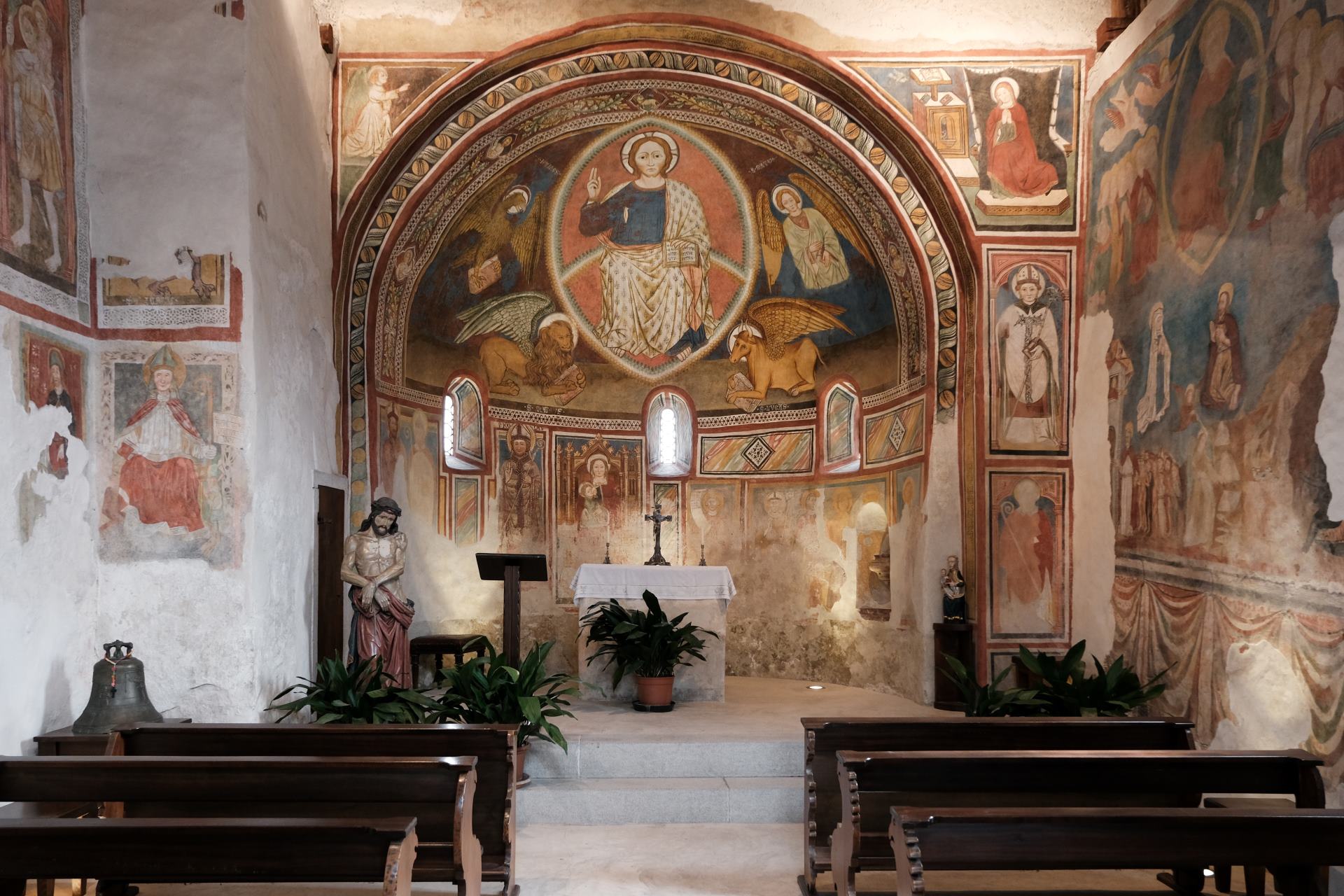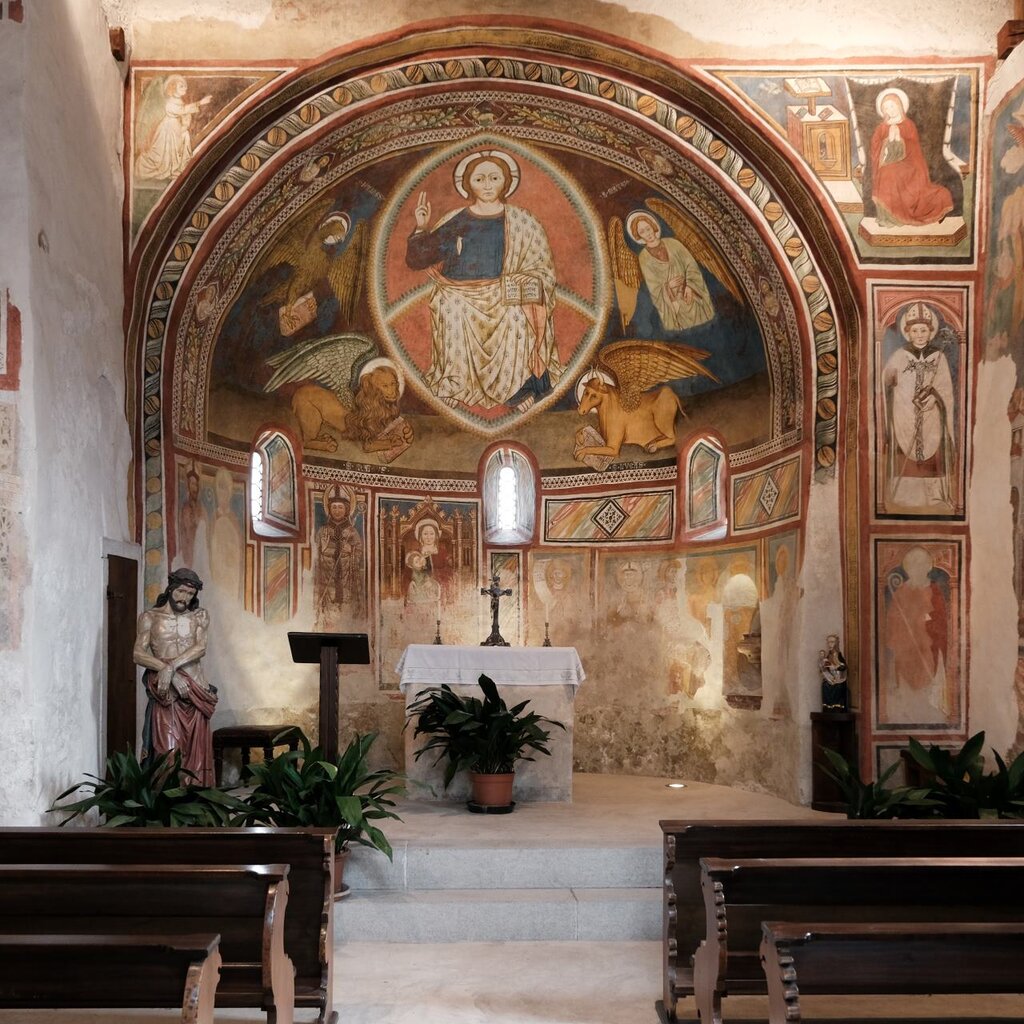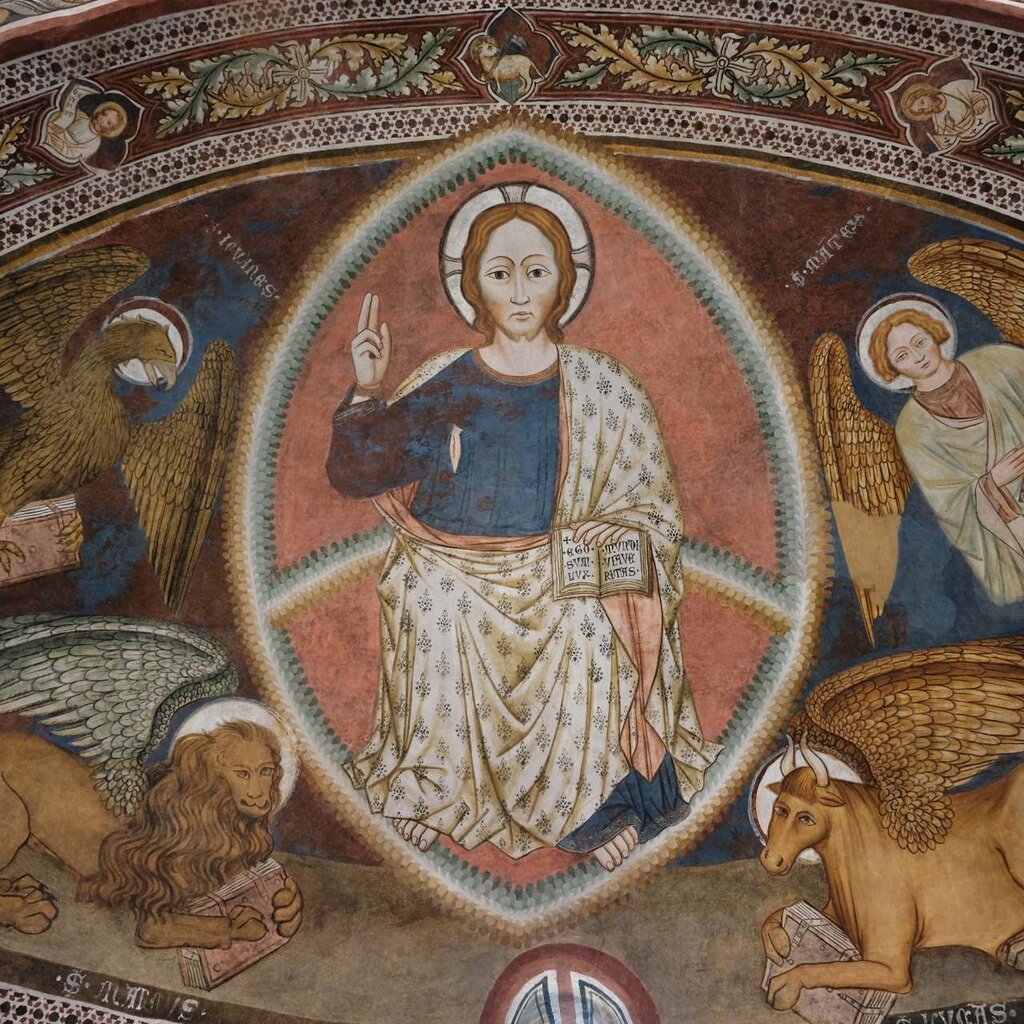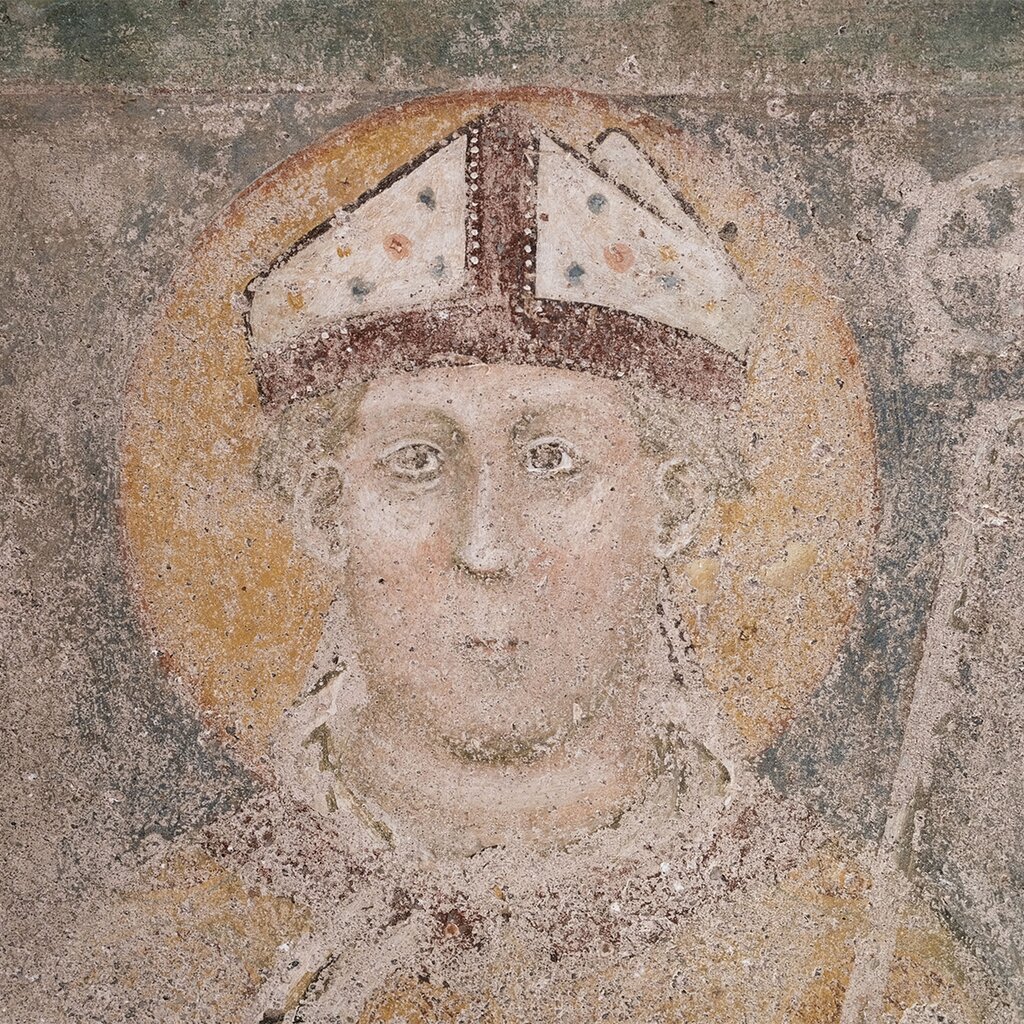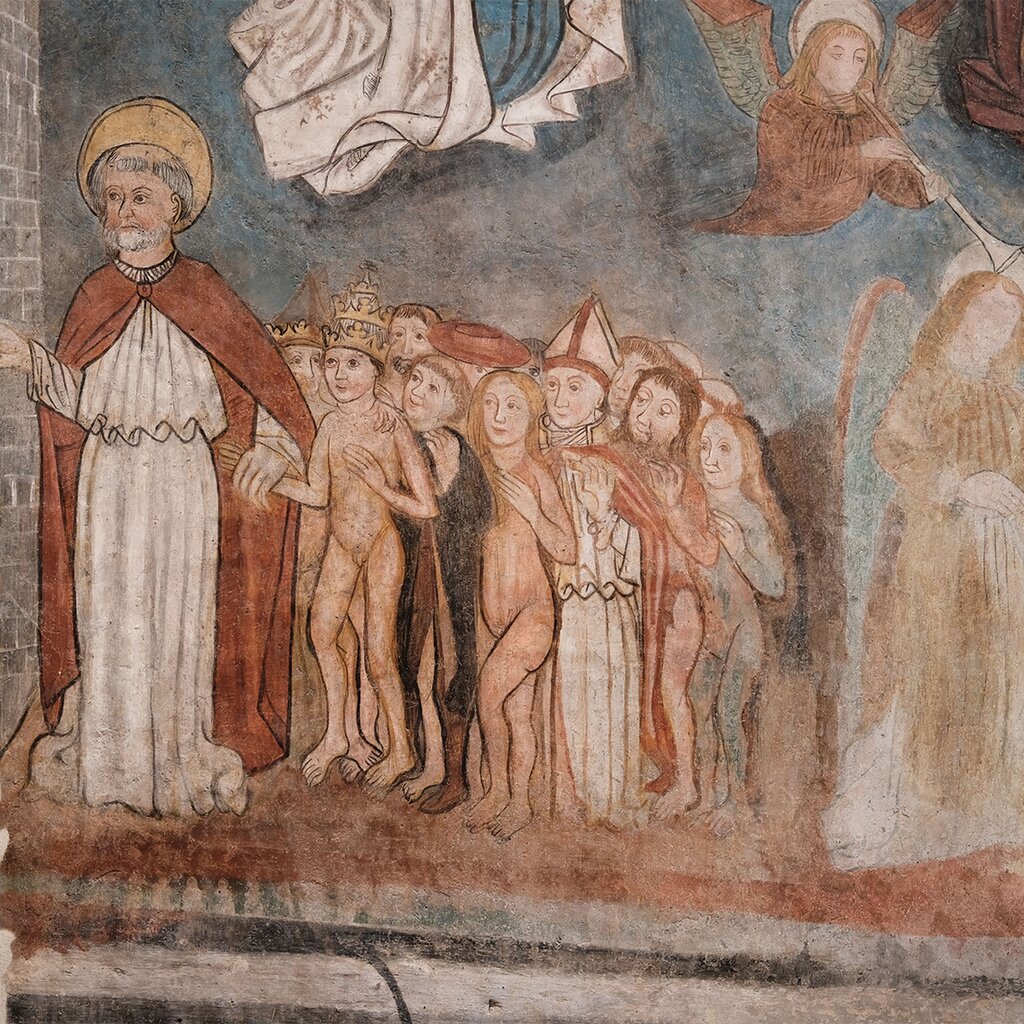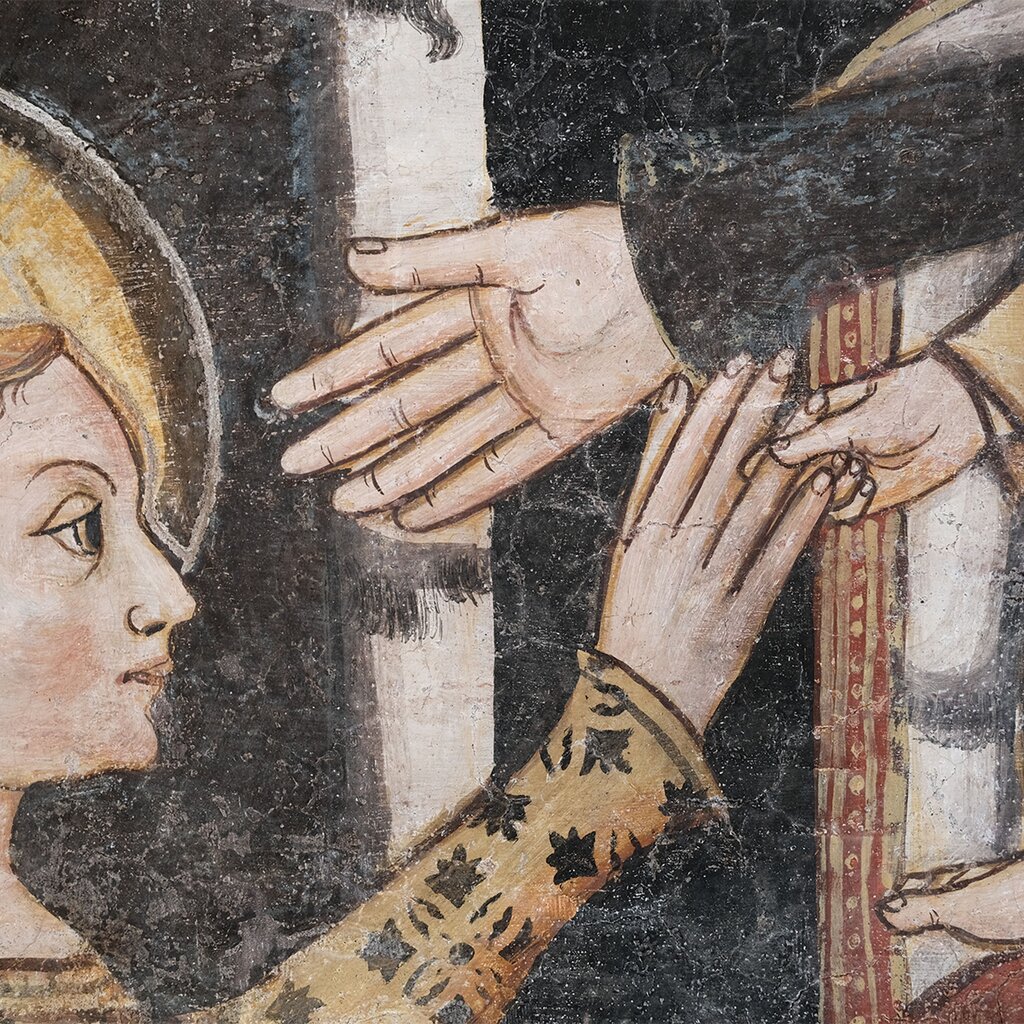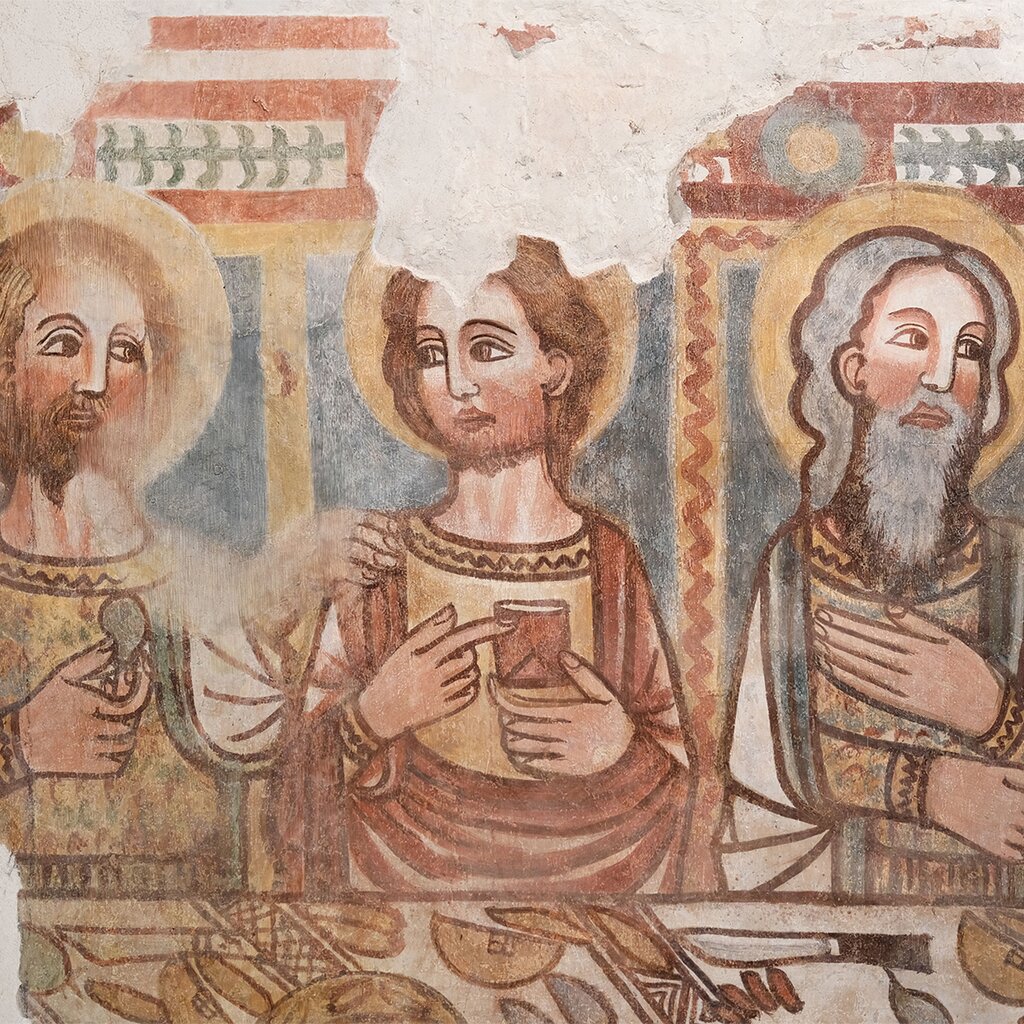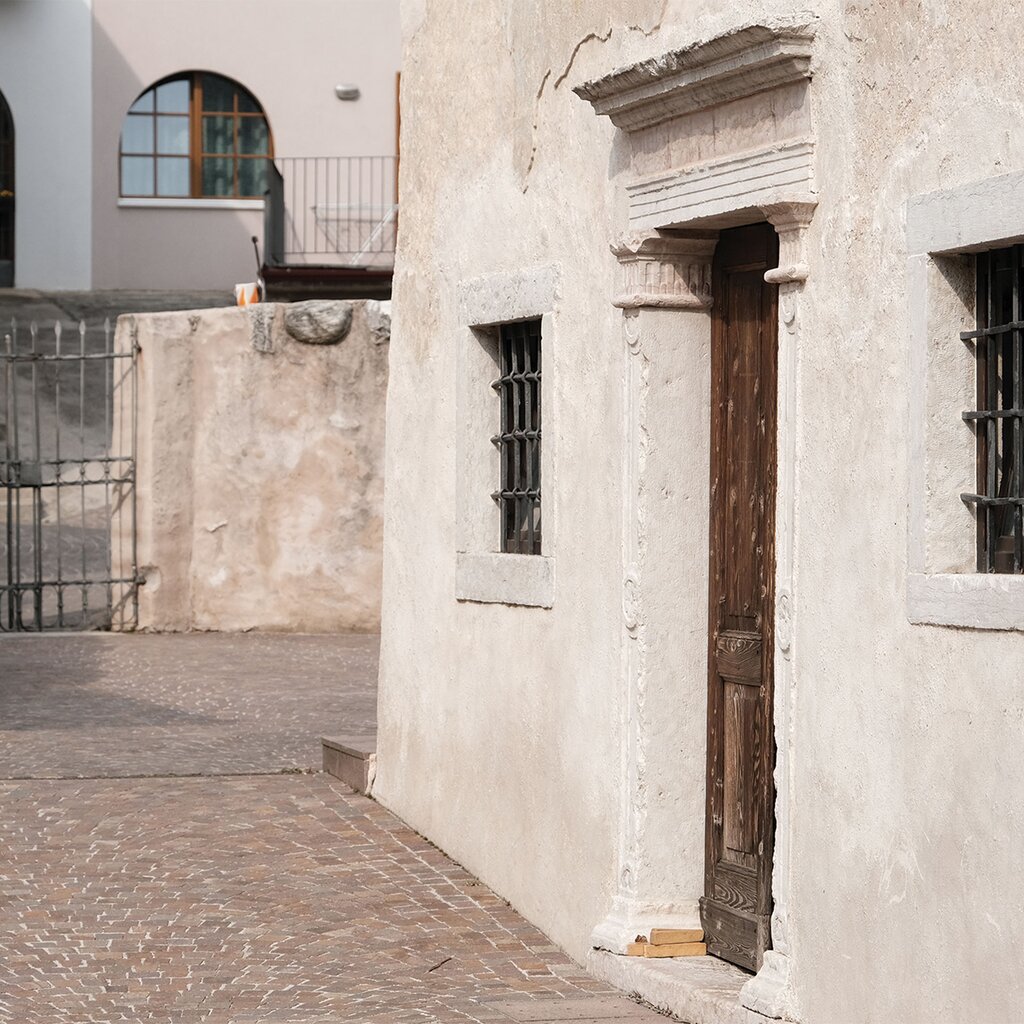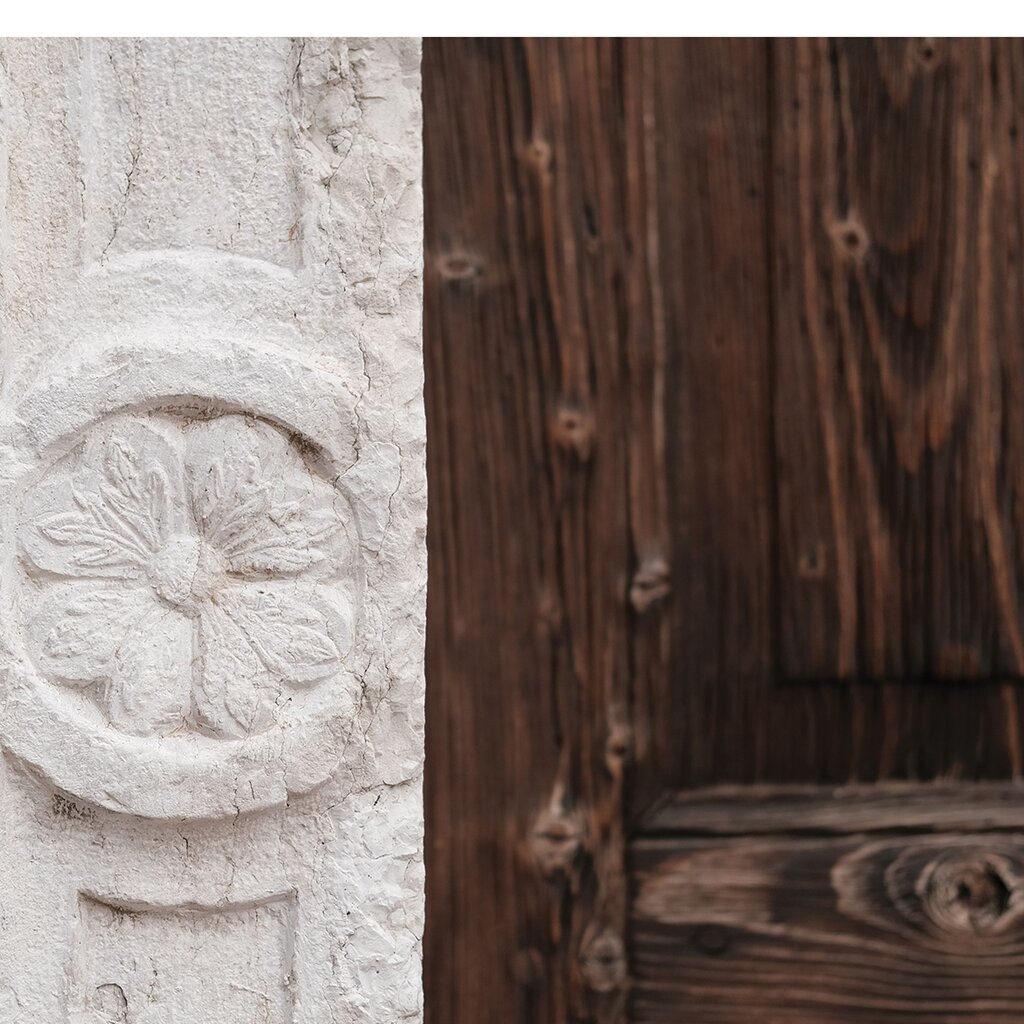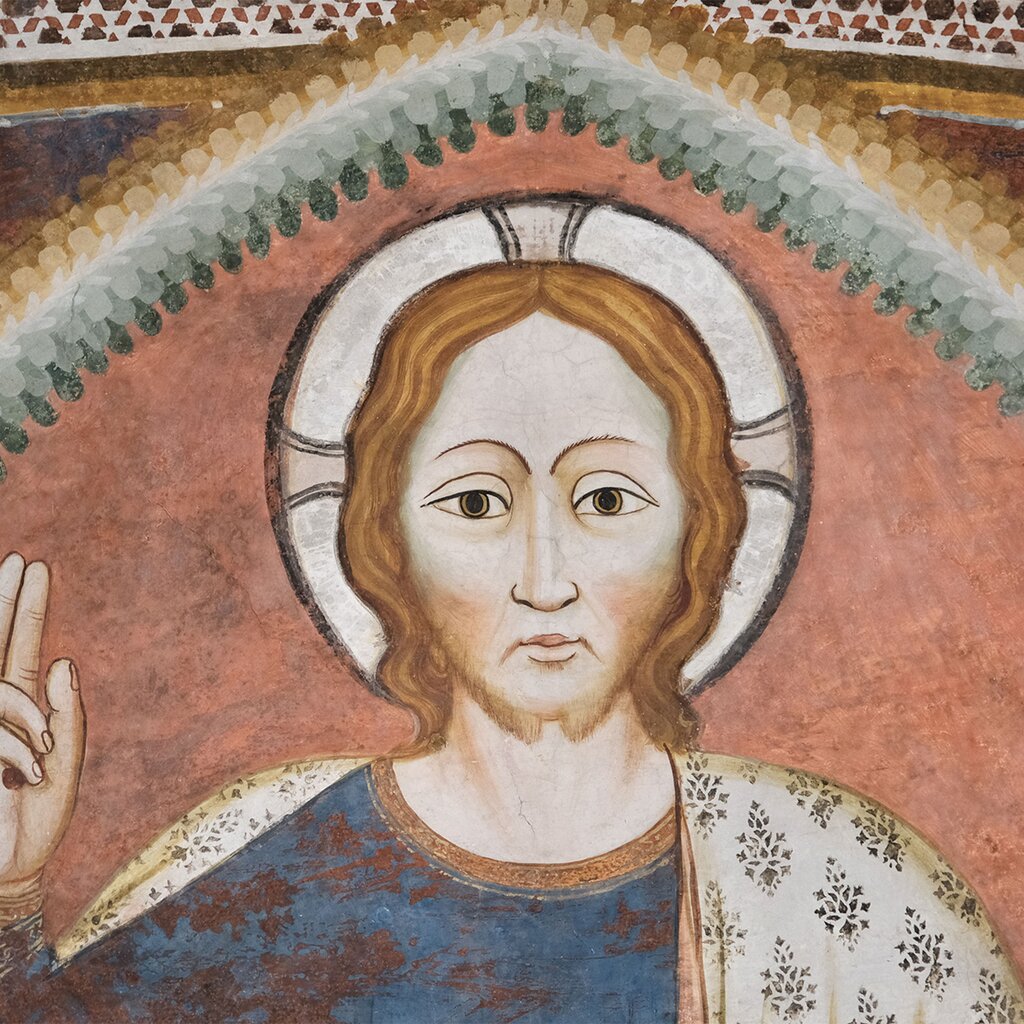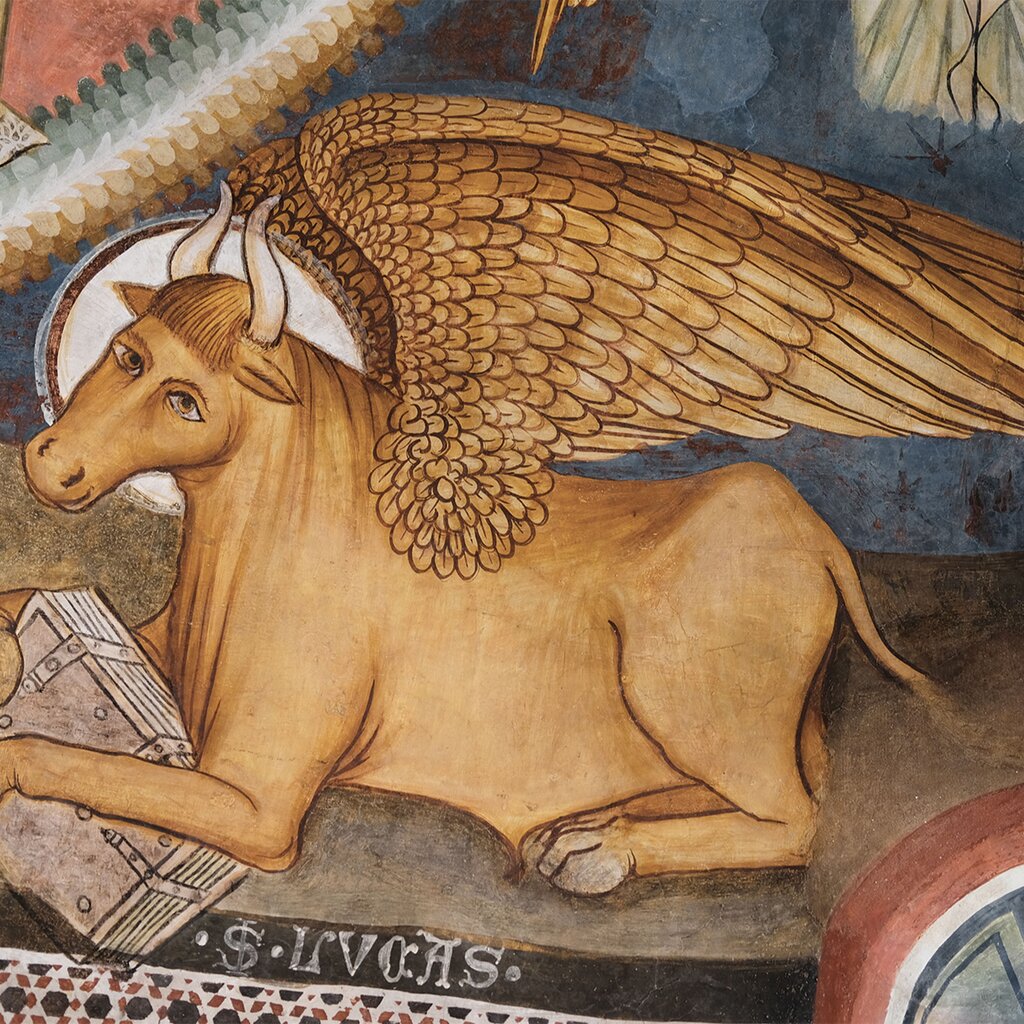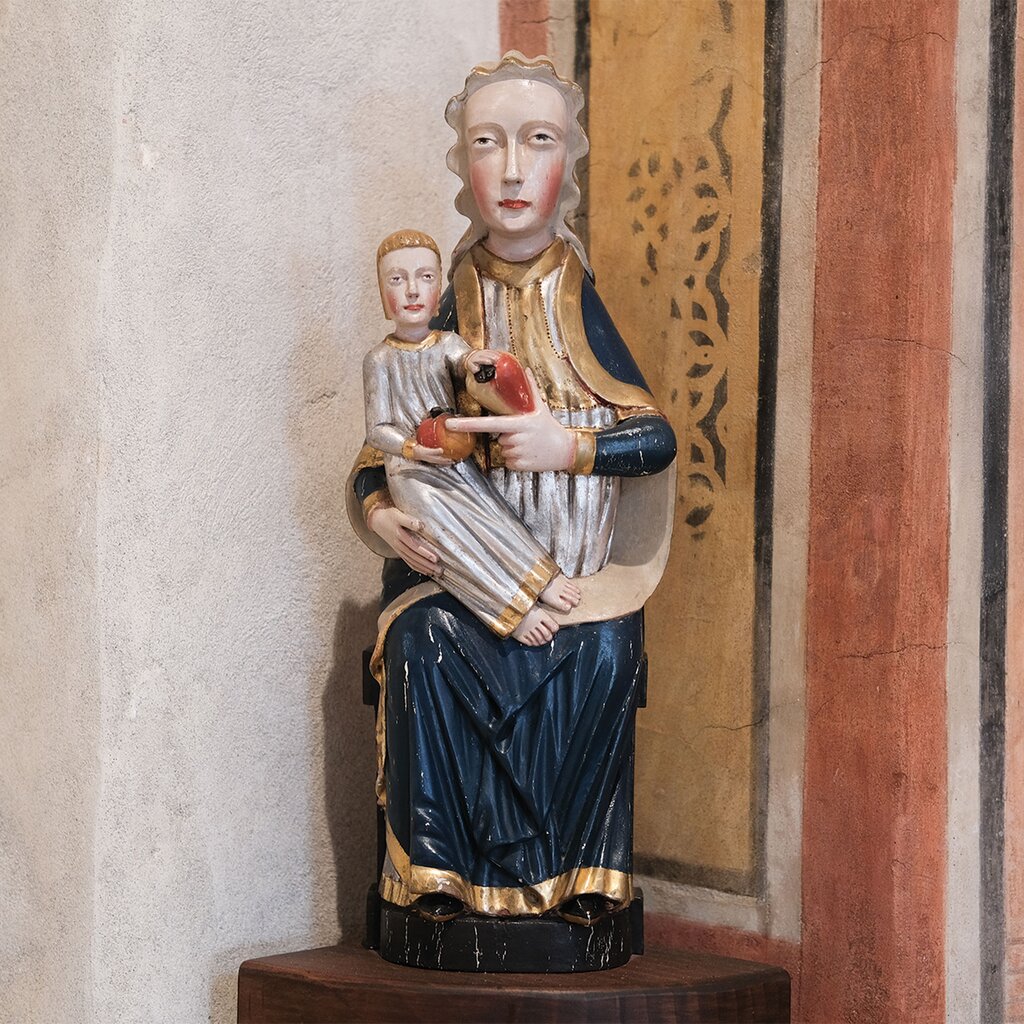
The church of San Vigilio, first mentioned on 14 December 1191, is home to a rich and varied painting heritage.
Churches
Pez District
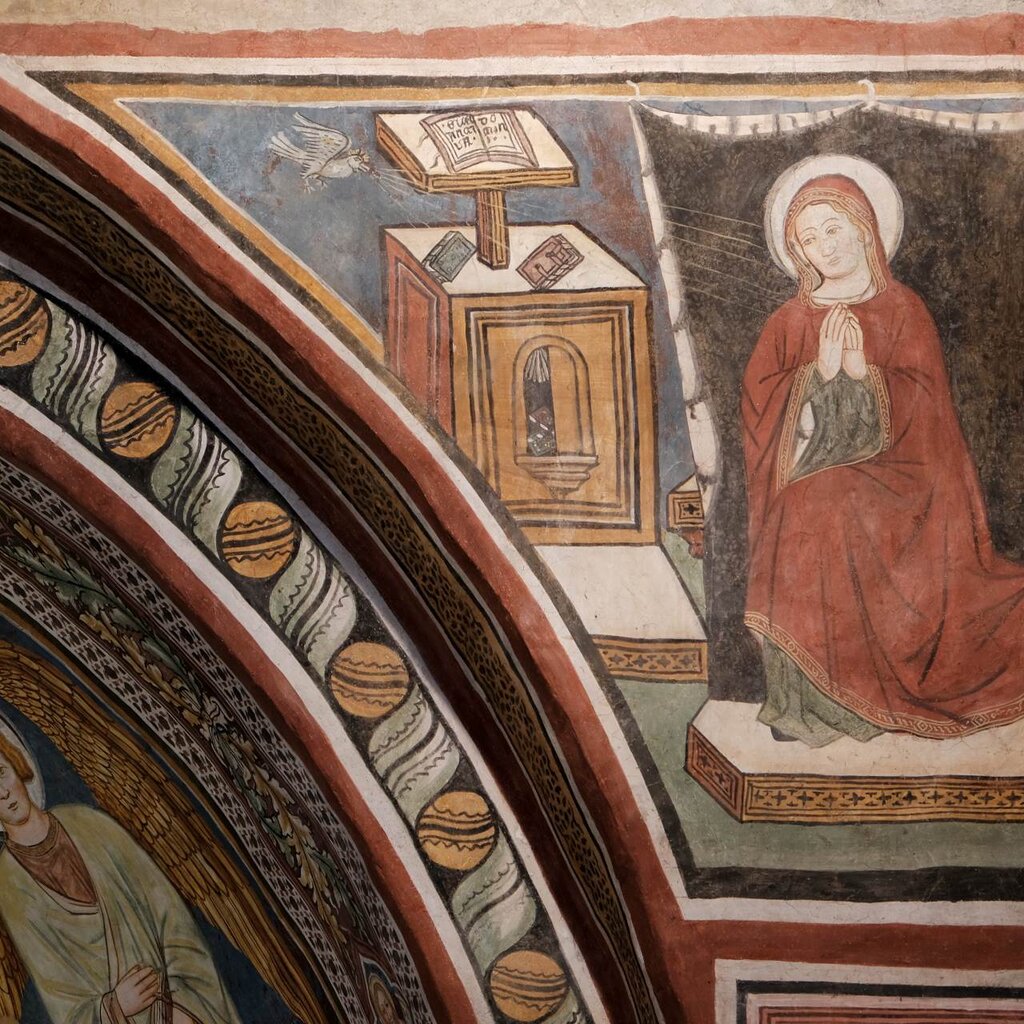
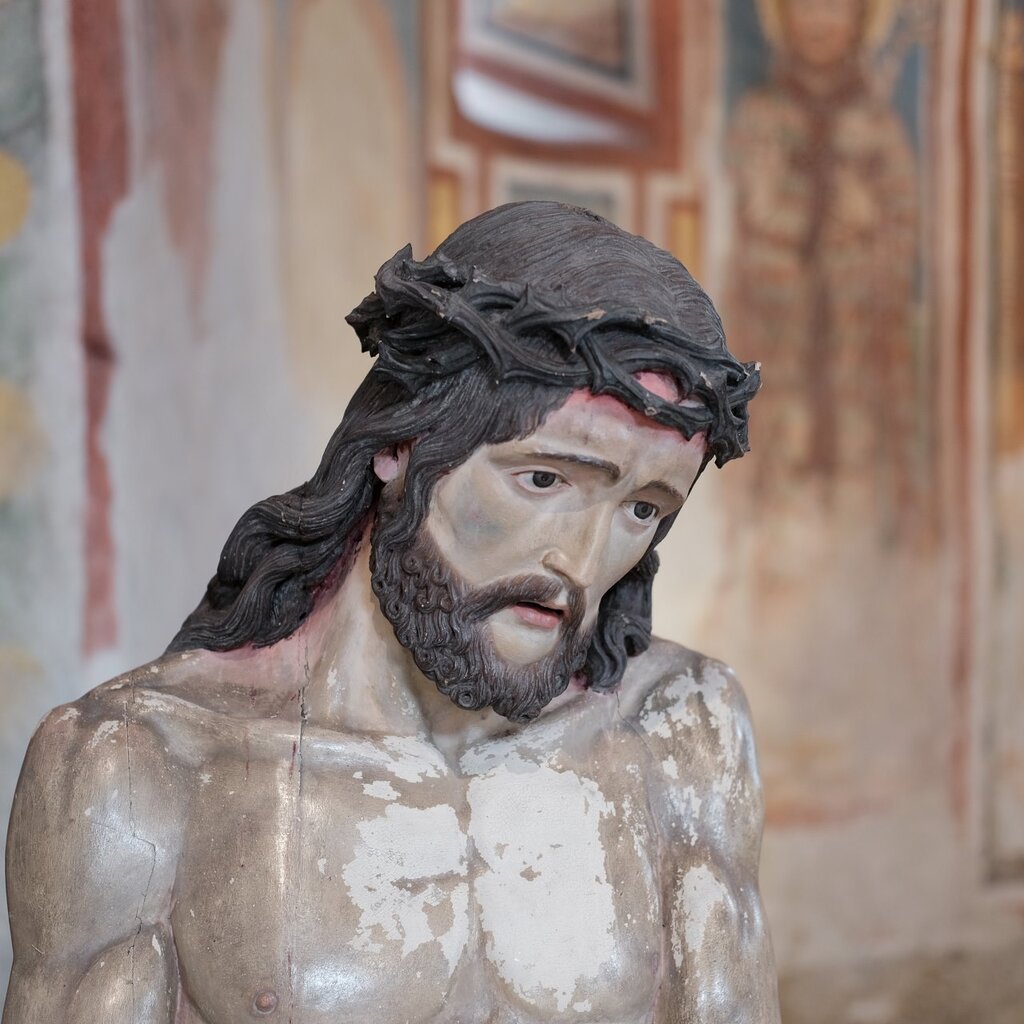
The church of San Vigilio, first mentioned on 14 December 1191, is home to a rich and varied painting heritage.
The oldest frescoes reflect an explicit Venetian influence, later giving way to stylistic features of more nordic, transalpine extraction in the works of a fresco painter who had clearly adopted the painting style of Leonardo da Bressanone in the more recent depictions. In the early 1300s the paintings were mainly concentrated in the apse and triumphal arch, later extending along the side walls with saints or narrative cycles, until finally achieving a fully developed and cohesive decorative structure and message over the centuries. There is a clear propensity for narratives in San Vigilio, with the oldest works concentrated mainly on the lower curvature of the apse, framed within later decorations dating to the last quarter of the XIV century, and probably updating the oldest remaining works. Moving from left to right it is still possible to identify the Prophet Daniel, Saint Vigilius giving his blessing, and Saint Dorothy flanked by two other figures no longer recognizable.
The church is opened during the occasional religious services.
If you find yourself outside the church but are unable to enter because it is closed, see inside by taking the virtual tour.
The church is open every day until November 1st with the following hours: 7.30am - 7.00pm
Contacts
Canonica di Cles
Via G. Marconi, 11 - 38023 Trento
cles@parrocchietn.it
0463 421155
Canonica di Cles
Via G. Marconi, 11 - 38023 Trento
cles@parrocchietn.it
0463.421155
This is a one-size-fits-all generic description for all details
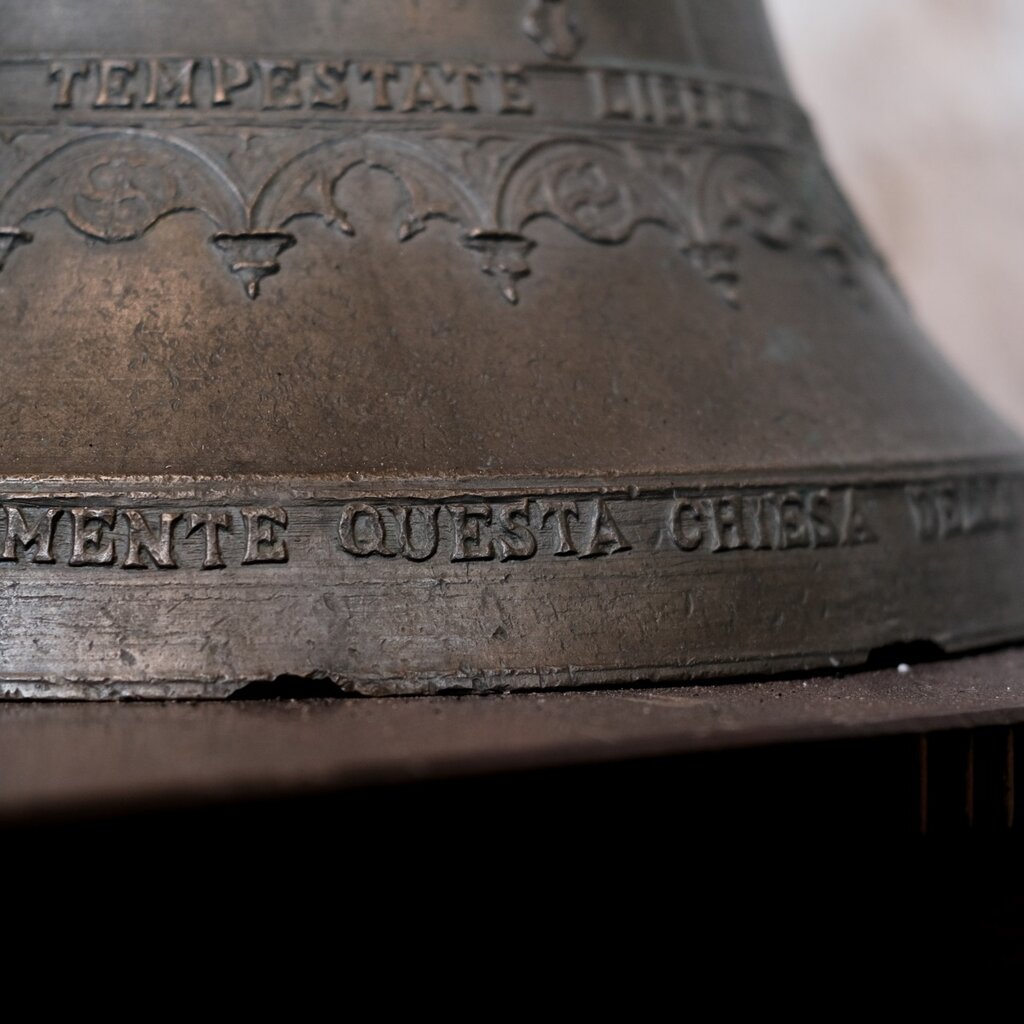
The Arcipretal Church of Santa Maria Assunta is the main religious building in the suburb, an antique parish church of Medieval origin first cited in 1188 and restored in Gothic-Renaissance style by the Bishop Prince Bernardo Cles in 1523. The bell-tower is 58 metres high with a bell weighing over 2200 kg, and it houses one of the “Wonders of Val di Non”, the silverware donated in 1727 by the Baron Giuseppe de Cles.
The church of San Pietro a Maiano was first mentioned in 1348. Recent archeological excavations inside have established extremely ancient origins for the building, based on burials dated between the VI and VIII centuries A.D. The interior is embellished with fine fresco paintings from the 1300s including a New Testament cycle painted by the Maestro di Sommacampagna around 1370.
The subsidiary church dedicated to the French pilgrim saint and miracle-worker, Rocco di Montpellier (popularly known as Saint Roch), is decidedly neoclassical in style with artwork by Carlo Bonacina on the facade.
The convent of the Franciscan Friars Minor and annexed church of Saint Anthony were built following the plague of 1630 on the initiative of the people of the Non and Sole Valleys.
Cles Hospital Chapel was inaugurated in 1962 and is the most significant item of 1900s religious architecture in the town. It is also one of the more mature examples of the creative partnership between the Cles architect Carlo Keller (1906 - 1982) and the Veneto artist Carlo Bonacina (1905 - 2001).
The church of Saints Vito and Modesto stands on the slopes of Monte di Cles, in a locality known as “San Vit Aut”. It was first documented in 1472 and houses a large wooden Baroque altar dated 1668, one of the masterpieces of the very successful Cles Strudel/Strobl artistic workshop.
Cited in 1328, the church of Santa Lucia a Caltron houses the altar doors originally of an old Flugelaltar, today fixed to the triumphal arch. It is worth a visit just to see them and observe the close links with the figurative language of South Tyrol.
The church of Santa Maria stands in the centre of the Mechel settlement in a raised position dominating the central square. It was first documented in 1226, rebuilt in Renaissance Gothic style in 1586, and promoted to a parish church in 1943.
The church of San Lorenzo is located on the north-eastern edge of the old centre of Mechel, not far from Castel Firmian. Documented for the first time in 1390 and restored in 1529, it contains interesting late Gothic fresco paintings and a rare image of Simonino (Simon of Trent).
Iconic of Cles itself, since Medieval times Palazzo Assessorile has been a central component in the history and urban development of the town.
Documented for the first time in 1509 but certainly already active in the Medieval age, the Confraternity of Battuti ran a hospice for the care of travellers and the ill within the suburb of Pez, known as Domus Dei.
Built by the Dal Lago family between the parish church and the old “Casa di Dio” hospital/hospice, it is a stately building with significant prestigious features. The original plan probably dates back to the XVIII century with some austere palatial features added over the course of the 1800s, subsequently reconfigured with neoclassical and revivalist stylistic elements, and then final additions in the 1900s.
Constructed in 1729 by the important Dal Lago family, who in 1822 were conferred noble status by the Austrian Empire with the title “de Sternfeld”.
The origins of Cles Hospital date back to the Medieval age when the Confraternity of the Battuti erected a health facility known as “Domus Dei” in the neighbourhood of Pez. The modern hospital, known as Ospedale delle Valli del Noce, was inaugurated on 19 October 1952 and today it is the third largest hospital in the Province of Trentino with a user catchment of more than 50,000 people.
First mentioned in 1423 as “Domus de Meclo”, the fortified residence known as the “Castle with a hundred windows” was renovated 1486 by Nicolò di Firmian.
Casa Tomazzolli in the suburb of Pez is an important example of traditional rustic-stately architecture, with massive forms developing around an ancient Medieval tower, an old entrance ramp, and a sundial dated 1822.
Castel Cles is first attested in a document from 1255 and belongs to the noble Baroni de Cles family. It stands on a dominant promontory, once overlooking the Noce River, now the Lake of Santa Giustina. Its original function was to control the important transport routes connecting Cles to the upper Val di Non. It was renovated in Renaissance style in 1537 by the Bishop Prince Bernardo Cles. Despite a fire in 1825 that destroyed the entire north-eastern wing, it is still one of the most imposing castle complexes in Trentino.
The Campi Neri area is an exceptionally interesting archeological site located uphill of the old town centre of Cles, in an area occupied today by the “Bernardo Clesio” comprehensive school complex and the A.P.S.P. “Santa Maria” medical centre.
Mechel has an important history linking the town back to extremely ancient origins, originally much lower down in the valley, almost on the shore of the ancient lake of Santo Spirit.
San Vito is too small to be considered a suburb, but it is nevertheless interesting and unusual.
Arriving from Cles you descended into the little valley of Rio Dres and after crossing the waterway you can climb back up to the village and continue on towards Val di Sole, going through Faè and traversing round the Mostizzolo canyon to reach Ponte Stori, where you can finally cross the Noce River at the most favourable point.
The medieval village of Calton lies on the far side of the Rio Dres valley, in the middle of gentle slopes rising up to the steeper mountainside.
This small settlement is on the ancient road arriving from Rolla and Ponte Alto, leading on towards the fortifications of Castel Cles, also connecting to the road from Piazza Granda to Val di Sole.
Lanza is the newest district extending towards the south beyond the little valley of Rio Ribòsc.
The settlement of Pez (attested in 1356 as “Dosso di Pezo”, meaning "Spruce Tree Hill" in the local dialect) lies along the road arriving from Rallo and Ponte Alto up to the foot of the small Dosso di Pezo hill, in a very sunny position.
Prato (which means "field", for the flat local landscape that was once used for cultivation and grazing) is the area alongside the northern shore of the old lake, in an especially advantageous position for catching the sun and the flat terrain.
Spinazzeda (from "spina" which means "thorn" and refers to the thorny bushes that proliferated along the edges of the marshy area lower down) is on the road from Mechel, Via Traversara, ultimately connecting with Rocchetta and the cross-roads of Piazza Granda.
The church of Santa Maria delle Grazie in the suburb of Prato was consecrated in 1691 and is affectionately known as ‘La Madonnina’ or ‘Little Madonna’ by the local people. Preserved inside is a cycle of paintings called Storie Clesiane (Historic Events of Cles) by the artist Carlo Bonacina and considered one of masterpieces of Trentino mural painting from the 1900s.
We’ve sent you an email. To activate the newsletter, click on the link you will find in the message. Thank you!