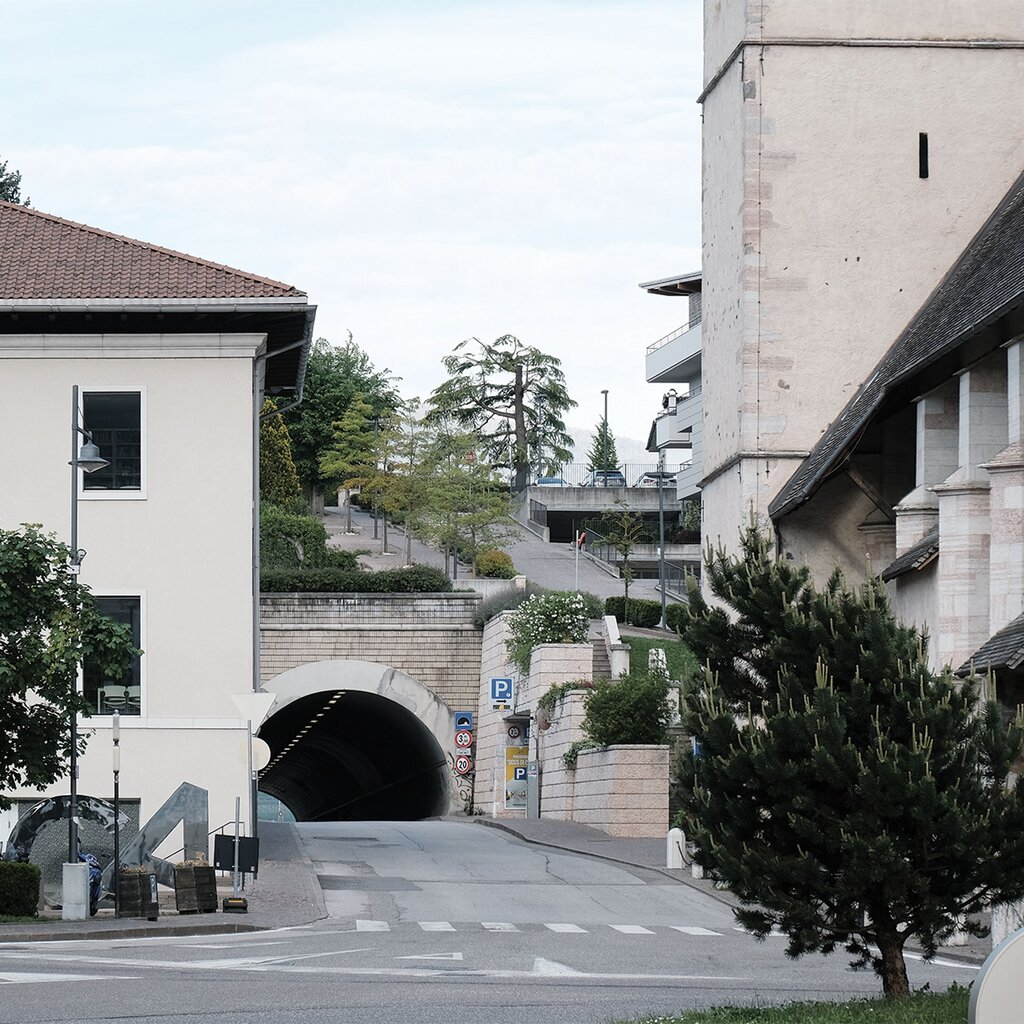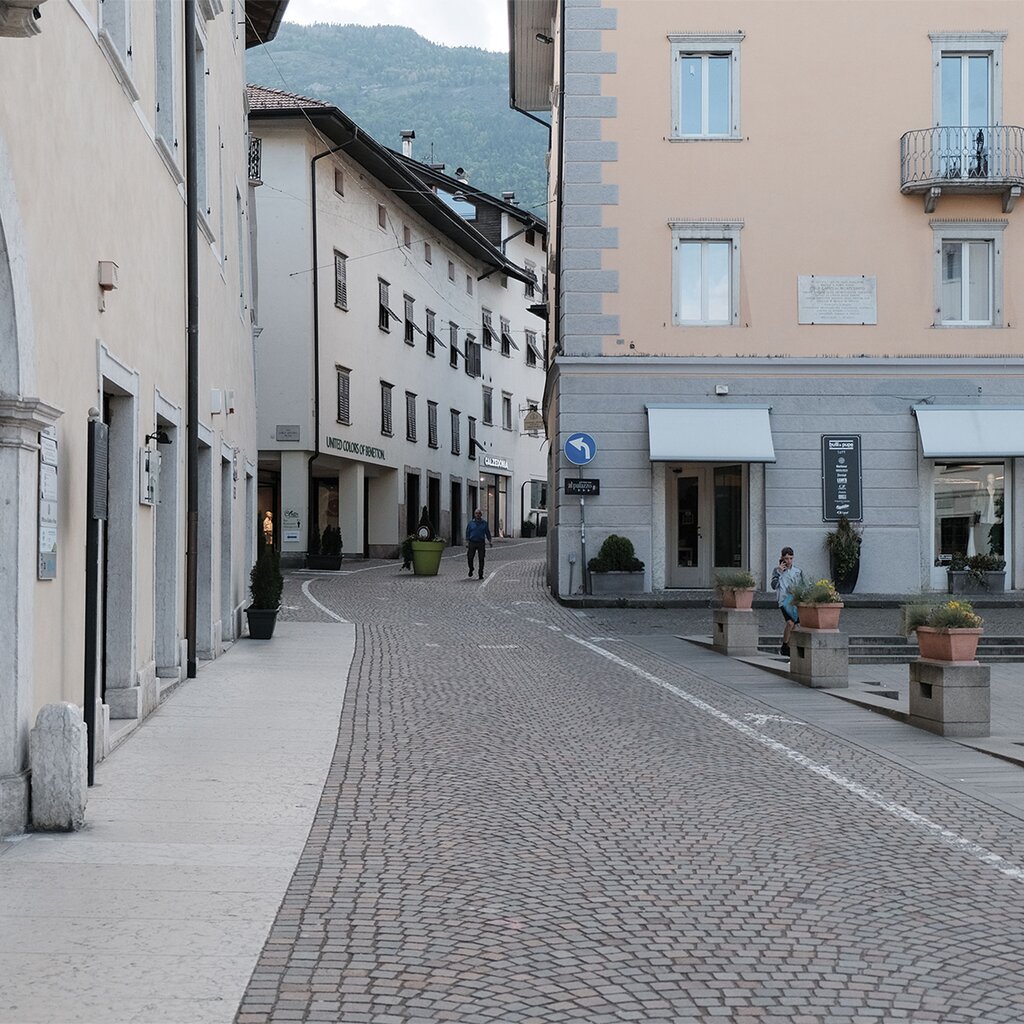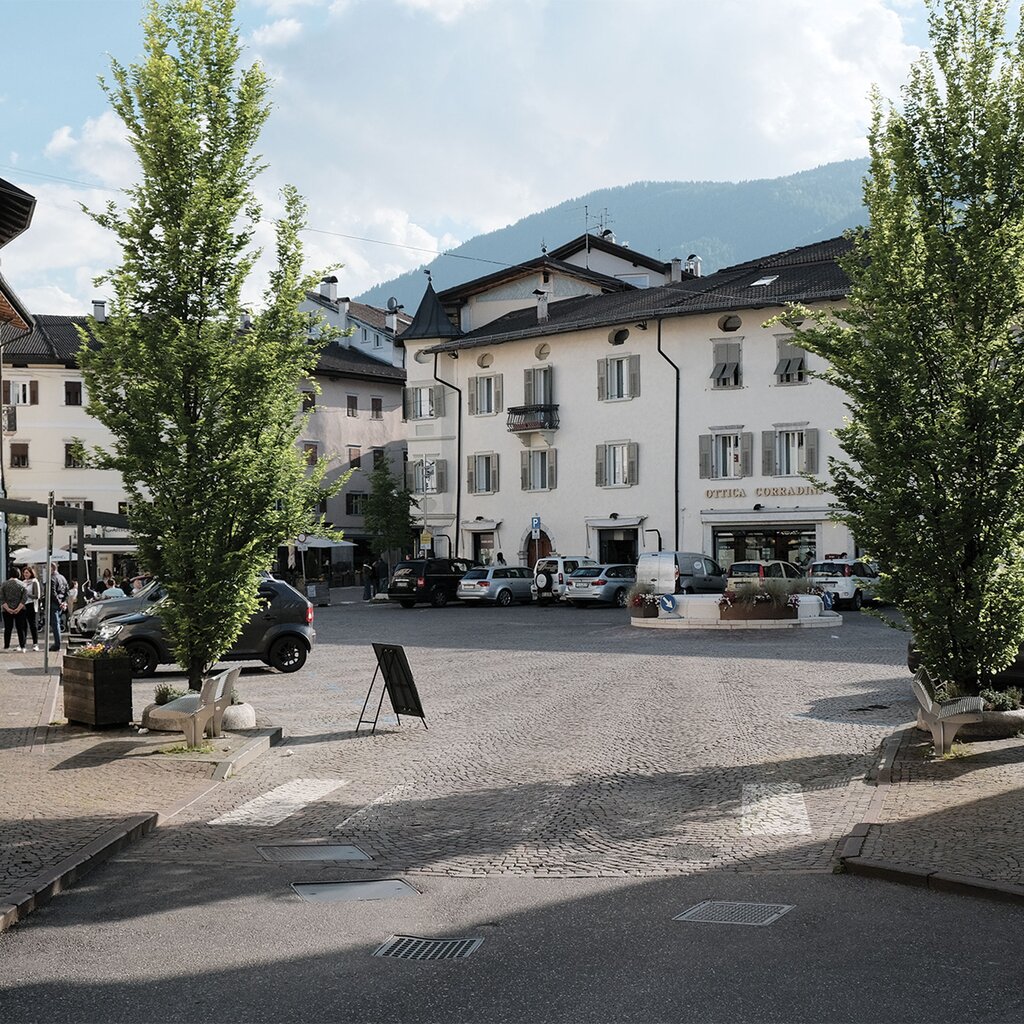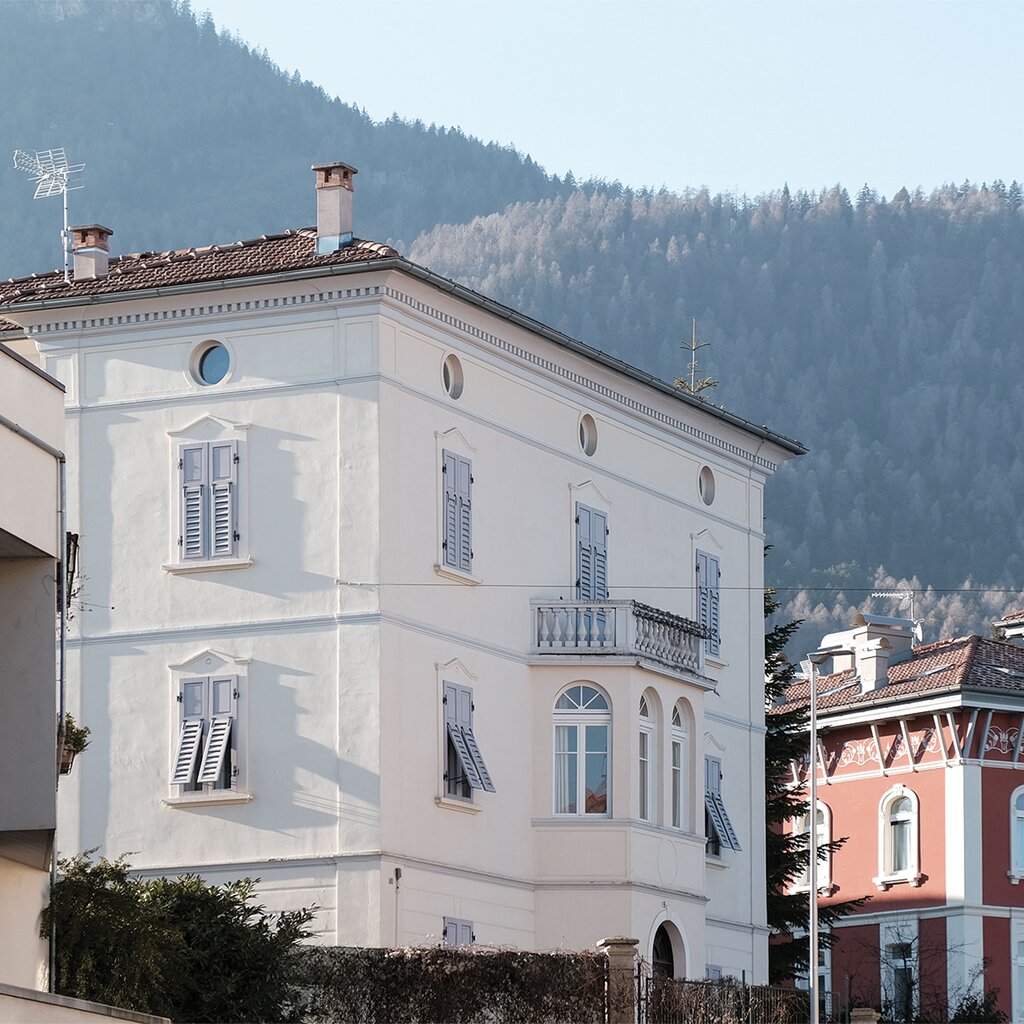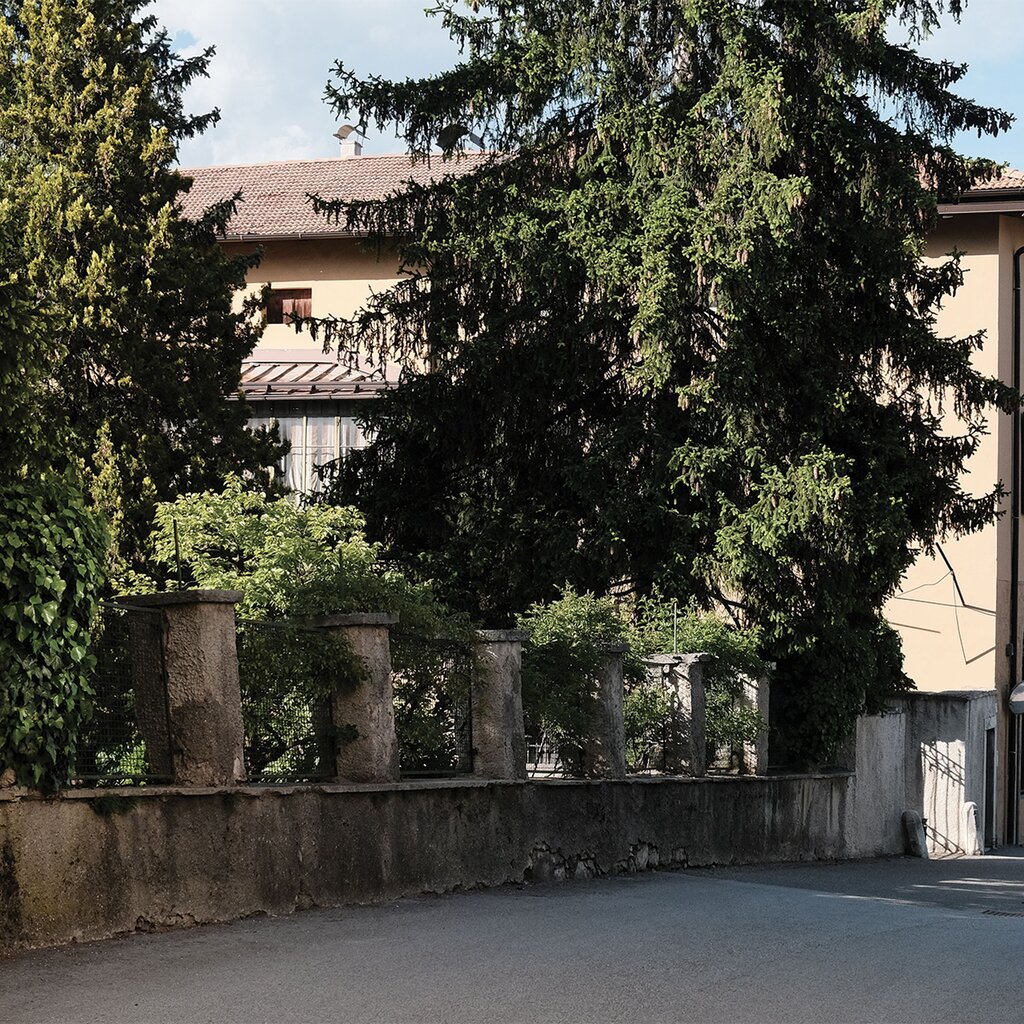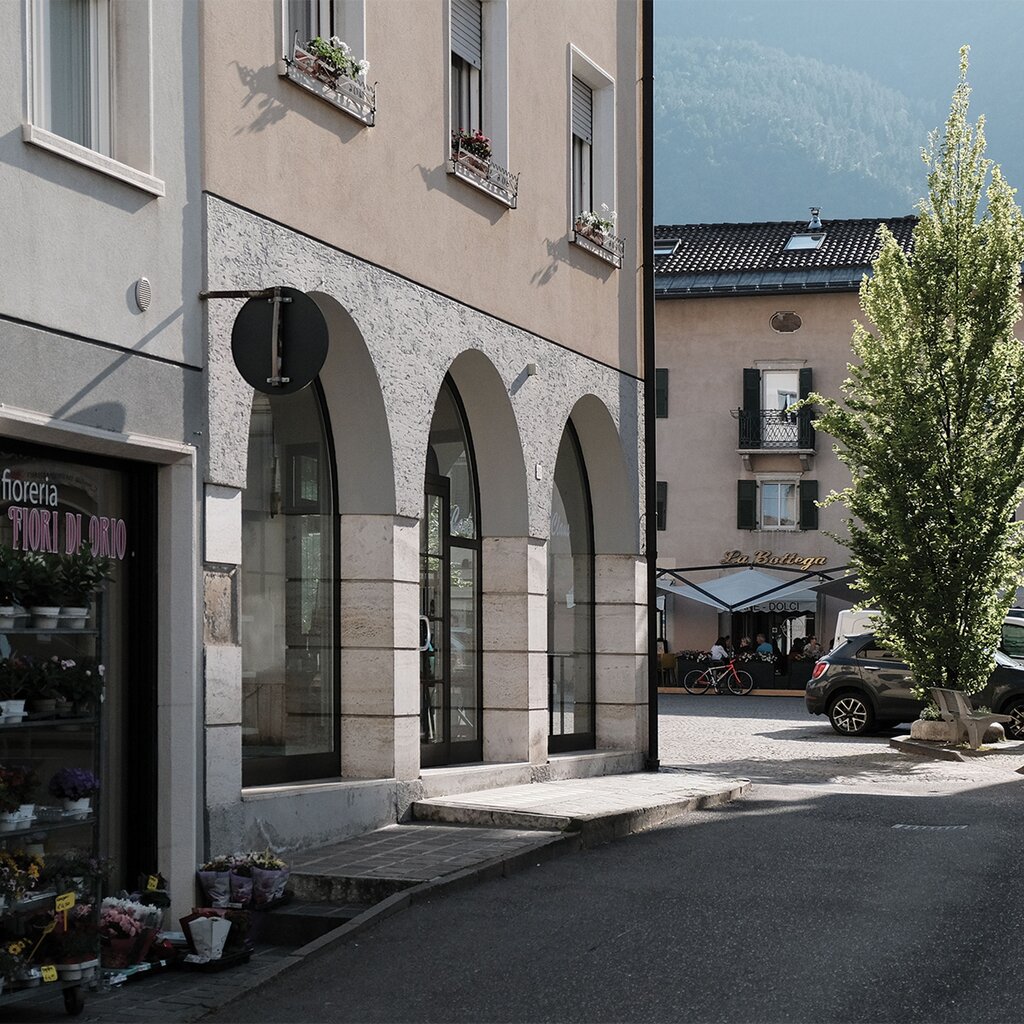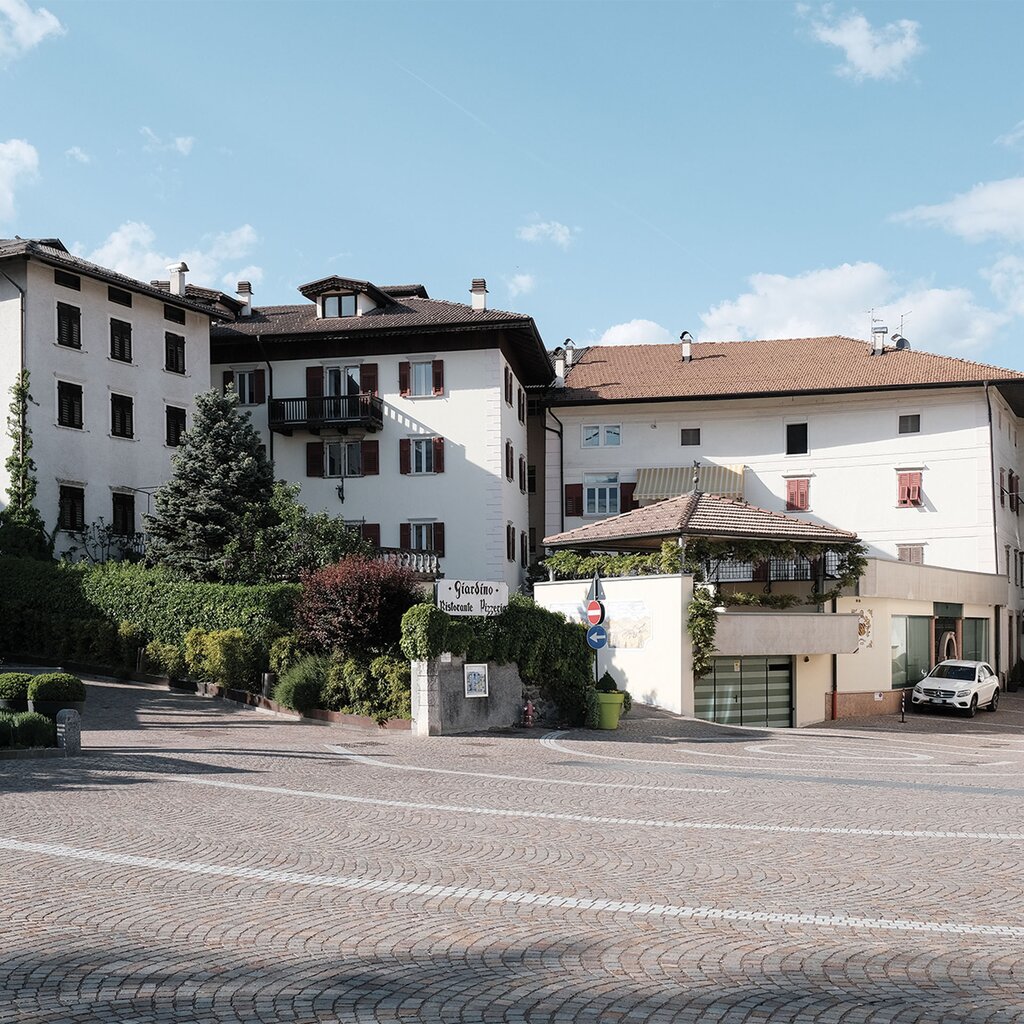
Today the town centre is articulated between Piazza Navarrino, Corso Dante, and Via Roma, which vertically split up the town as they lead towards Piazza Cesare Battisti, the central Piazza Granda, and Piazzetta de Bertolini. In the early 1800s Cles retained its basic Medieval layout, adapted to the modern age.


The township of Cles today is the outcome of human settlements developing over the centuries around the most important route centre of the Noce river valleys, taking advantage of particularly favourable geographic and environmental conditions. Originally based on the settlements of Spinazzeda, Prato, and Pez that faced onto opposite sides of an ancient lake, combined with the scattered settlements of Maiano, Dres, and Caltron, it expanded progressively until all these elements became integrated with the urban centre, later incorporating the village of Mechel and developing a new transport system which resulted in the very recent residential district of Lanza.
The extensive lake zone of Santo Spirito extended over the Paludi from Talào to Nancòn, invading the entire Moje area right up to the edge of San Rocco where there was a boat jetty from the Rhetic era. The lake shores, shielded to the south by the Doss dei Pini and Nancòn hills, to the east by the Doss di Pez and Allodole hills, to the west by the mountain slopes, and to the north by the valley of Rio Dres, always represented an ideal setting for the establishment of small villages. The area also provided extensive areas suitable for urbanization, valuable agricultural land, abundant water, a sunny location, easy access from all directions, and a strategic view over the local territory, which altogether made Cles the natural capital of the valley.
Having evolved as a strategic commercial centre, there followed a period of urban expansion with definitive completion of what we today consider to be the old village centres, with conversion into masonry of the remaining timber houses. The main buildings constructed in the Prato area also derive from the 1800s, consolidating the aesthetic imprint of what would later become Corso Dante with its canal and famous double row of horse chestnut trees. These buildings would later be used as military barracks, school premises, and finally local council offices, together with hotels, inns, and shops. The status of Corso Dante was further enhanced at the end of the century by the construction of the new Via Trento, which arrives from the south and skirts the district of Pez towards the Moje, providing a less steep approach and avoiding the ascent up to Via Romana, which was no longer capable of handling the constantly increasing traffic. Via Trento could be defined as the first ring-road of Cles, a town that has always faced the challenge of adapting its road transport systems to deal with constantly growing numbers of vehicles and the demand for mobility, which at the same time represented a source of vital energy for the town. The 1800s were thus a very prosperous period for Cles, further sustained by the new Santa Giustina bridge, inspiring faith in the future in the prospect of a new century that promised vast political changes, expectations that were amply fulfilled but at the terrible cost of two world wars and a dictatorship. The Santa Giustina bridge and the new Via Trento established the preconditions for the construction in 1909 of one of the more ambitious and formative projects in the Noce River valleys, the Trento-Malé railway line. It ran along Via Trento to the station near the parish church beyond the road, where the buildings today present a rounded shape.
The station was a small, very attractive and elegant Liberty style building, now lost, within a rather bare urban context. Nearby the canal that ran down beside the horse chestnut trees was covered over. The railway continued along Via Roma, through Piazza Granda and up Via Filzi to the area of the ex-primary schools, or specifically the Old Station. Its very elongated shape mirrors its function as a rail terminal for parking goods and passenger trains. Here there was another small Liberty style building along with a roofed service area and awnings. The railway curved slightly towards the east to enter Val di Sole over the majestic arched bridge that can still be seen over the Rio Dres. This new electric train line was a strategic piece of infrastructure that changed the destiny of the area. Previously, the journey to Trento had only been possible on foot or by animal transport and was out of reach for common people. The train was very large, spartan, and noisy, the journey was long, uncomfortable, and dusty, but the Mayor of Trento, Paolo Oss Mazzurana, had provided the inhabitants of the valleys with an unprecedented opportunity for movement, initiating a period in which mobility would become increasingly important. A meeting was held in 1894 at Palazzo Scotti (the current town hall) to reach an agreement about the railway, but Oss Mazzurana suffered an attack of bad health and was transported to Trento where he died the following year. Catering and accommodation facilities were established along the urban section of the railway, in addition to the old Albergo Cles, which at this time changed its name to Albergo al Tram, or "Railway Hotel". The peripheral Albergo Centrale hotel was established along with Hotel Vittoria on Via Trento itself, while Piazza Granda was home to the Aquila Nera. In 1908 the majestic Grand Hotel was erected as a partial reconstruction, incorporating the small Madonna delle Grazie church in a decidedly ambitious project. The same year saw the construction of the Albergo Chiesa, right on the summit of Doss di Pez, subsequently becoming the Miramonti, the Don Orione convent, a school and kindergarten, and today dedicated to local associations and the Music School. Starting from 1958, together with the new Viale Degasperi, one of the town's most strategic and important structural works was implemented: the relocation of the railway outside of the town with the excavation of a tunnel to provide easy access from the piazza to the new station.
The different districts and suburbs today remain defining reference features for the inhabitants of Cles and shape the growth of the ever evolving local community. The Case Rionali public facilities today are active in multiple spheres and represent a hub for public and social activities, like the Sagra festivals that animate the different seasons in Cles.